
Essential Question: How will you develop your identity as an anti-racist, humanizing teacher working for social justice?
Identity & Sanctuary
In the very beginning of the MTTL program, we engaged in identity work grounded in the belief that educators must deeply understand who they are, their positionality, and the ways they influence the classroom. This artifact reflects my exploration of identity through the lenses of family, education, vocation, and literature. Symonette (2009), in Cultivating Self as Responsive Instrument: Working the Boundaries for Ethical Border Crossings, described cultural competence as one’s orientation toward diversity and explained how our “lenses”, “filters”, and “frames” shape how we perceive and respond to the world around us. Similarly, Sara Lawrence-Lightfoot’s (2013) work on portraiture emphasizes that self-exploration helps individuals understand how people construct meaning and respond to social forces within their lives. The ways that I perceive the world, and how I construct meaning, are deeply rooted in my upbringing, the communities closest to my heart, and my lifelong habit of reading.
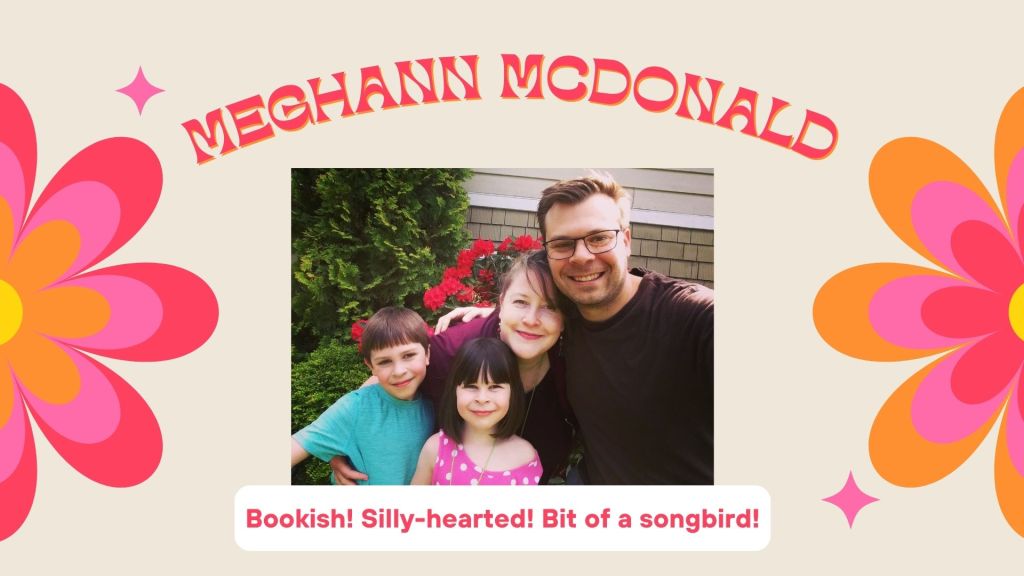
As I reflected on the people, places, and experiences that have shaped me most deeply, I began to recognize the spaces where I have consistently found sanctuary, belonging, and purpose. In The Spirit of our Work, Dr. Cynthia B. Dillard (2022) describes sanctuary as a place of safety, comfort, introspection, and spiritual connection. As I reflected on my own life, I realized that my strongest sanctuaries have always been my family, my educational communities, and books. In particular, my husband, children, parents, and extended family ground and renew my spirit.
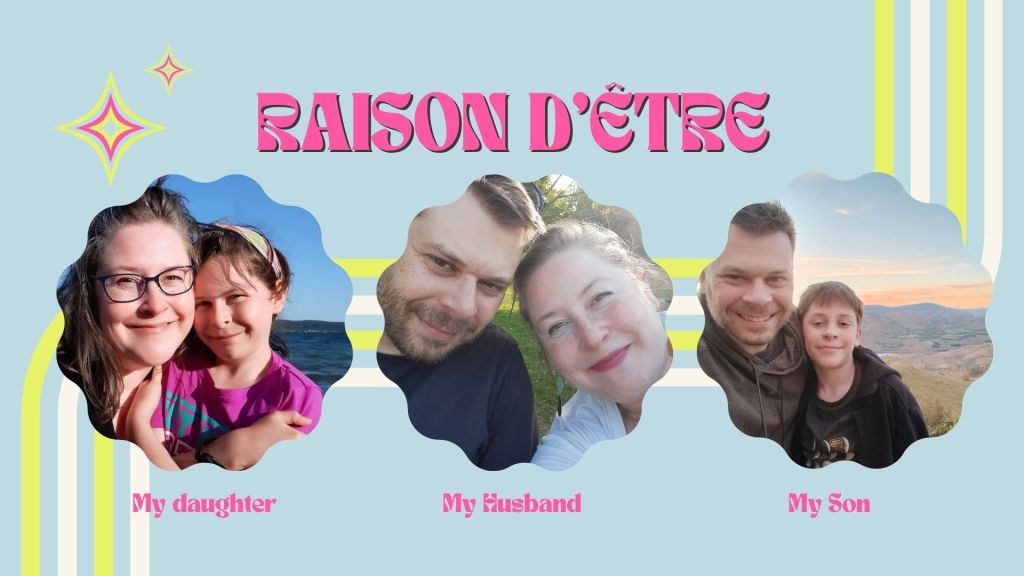

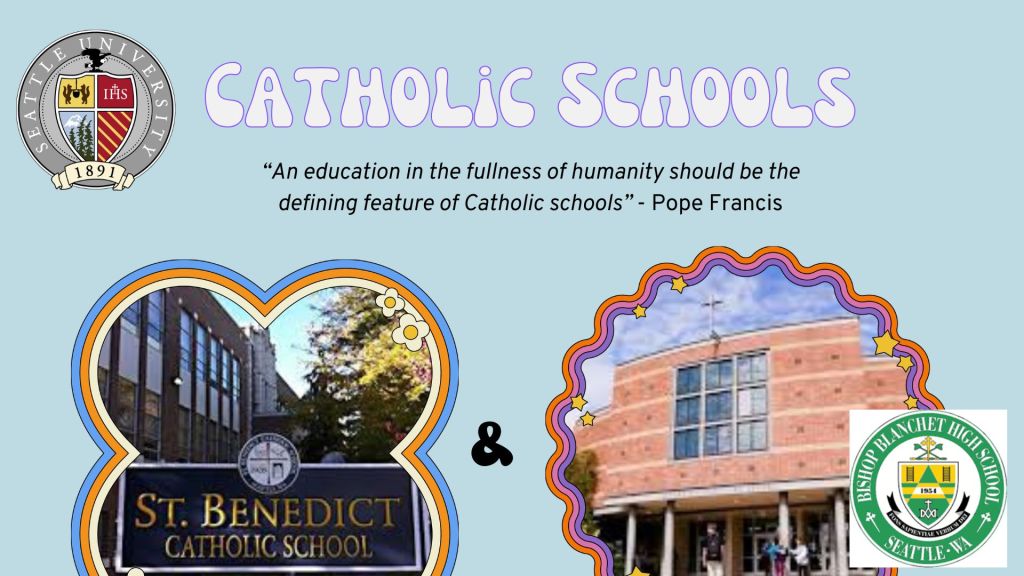
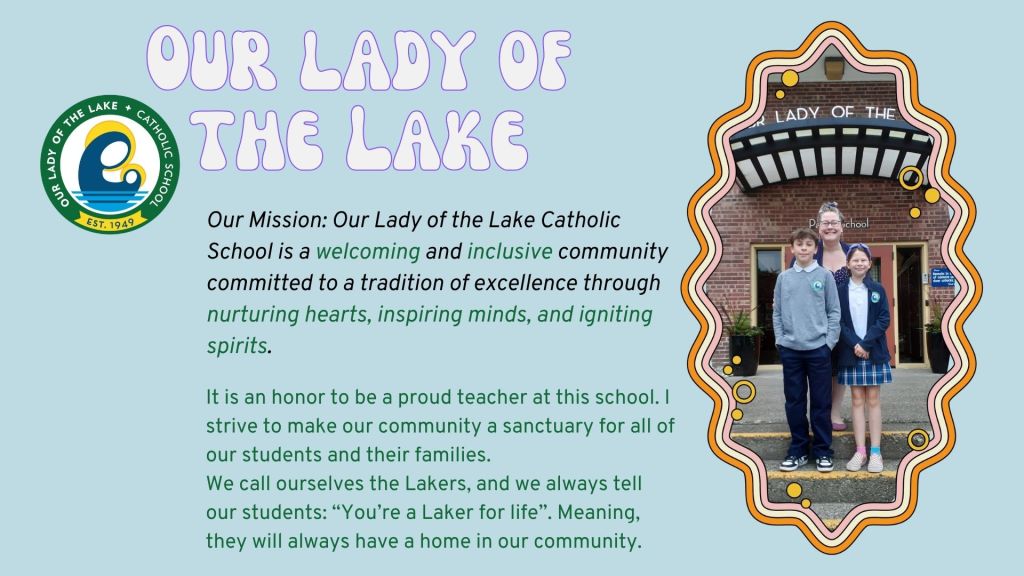
My Catholic educational experiences as a student at St. Benedict’s, Bishop Blanchet High School, Seattle University, and as a teacher at Our Lady of the Lake, taught me a great deal about the world and my responsibility to serve others, particularly communities furthest from justice.
Alongside my family and educational communities, literature has always been one of my deepest sanctuaries. As a lifelong reader, I turn to books when I want to better understand the world or encounter perspectives beyond my own. Reading has shaped not only my intellectual life, but also my empathy, curiosity, and sense of connection to others. My love of literature ultimately led me down a path of English Language Arts education, and eventually my research project into fostering students’ joy and engagement for reading.

Creating a safe and welcoming classroom environment is one of my core priorities, and reflections around sanctuary have deepened my understanding of classroom community. I want my classroom and school community to be places where students feel known, valued, intellectually curious, and celebrated for their authentic selves. Just as my own sanctuaries nurtured my spirit and sense of purpose, I hope to cultivate spaces where students experience dignity, belonging, and affirmation.
Educator Self-Portrait
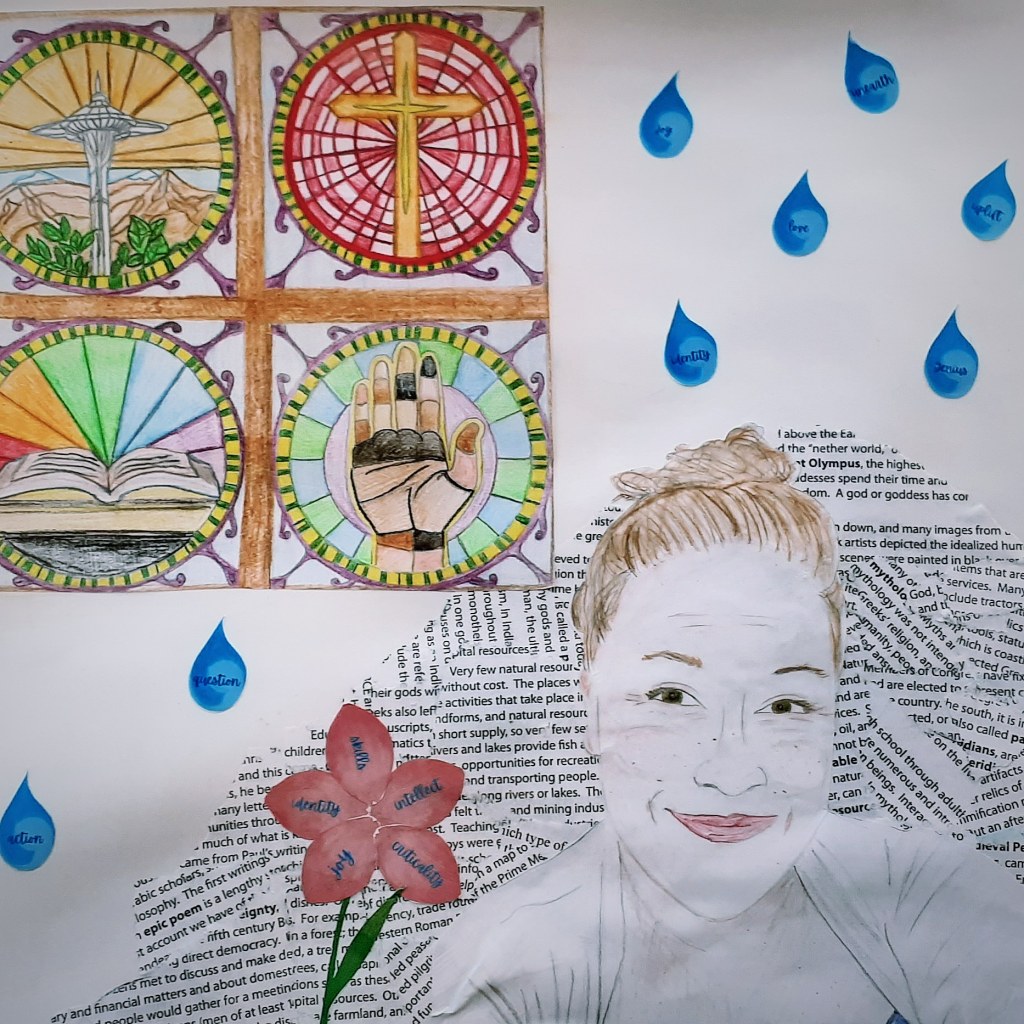
I created this self-portrait early in my graduate journey, yet it continues to reflect many of the values and tensions that shape my identity as an educator today. Early in the MTTL program, we were challenged to examine our identities, positionalities, and beliefs in order to better understand how we show up in classrooms and relationships with students. Through both visual symbolism and written reflection, this piece explores the influences that shaped me: my Seattle roots, Catholic educational background, love of literature, commitment to social justice, and belief that classrooms should be places of safety, joy, and belonging. Inspired by Dr. Gholdy Muhammad’s (2020) framework of identity, skills, intellect, criticality, and joy, this self-portrait represents some of my earliest attempts to imagine the kind of educator I hoped to become and the kind of learning communities I hoped to cultivate.
Artist Statement
Ms. M is a freckly teacher with slightly rosy cheeks and eyes that arc like rainbows when she smiles. Her roots extend deep into the PNW ground. Born and raised in Seattle, she grew up on a street in the Wallingford neighborhood called “Sunnyside”, and she carries that name in her heart, seeking out the sunny side in all her endeavors. She was raised in Catholic schools, the only daughter of a dad who left the church because he believed Religion led to suffering in the world, and a mom who converted to Catholicism then cantored Sunday mass for most of Ms. M’s formative years. Influenced by her parents’ vastly different views on faith, Ms. M became adept at planting one foot in tradition and one foot in polite rebellion. She is both idealistic and cynical, faithful and changeable. In her eyes, one can see shades of forest green, specks of burnt orange, hazel-hued wonder, and an indomitable spirit inherited from a long line of strong and unapologetic women.
In the classroom, she is calm and easygoing. She takes things in stride. Her classroom is a safe space for students to be completely, authentically themselves. She prides herself on seeing the unique gifts and boundless potential of every student. Ms. M is deeply influenced by the work of Dr. Gholdy Muhammad (2020), who outlined five pursuits in education: identity, skills, intellect, criticality, and joy. Ms. M believes in the importance of growing all five of these pursuits within her classroom by creating a new set of window panes through which students can understand themselves and the world. Ms. M is ready to tear-up outdated curricula and practices and forge a new way that better serves the needs of each of her students. She believes that developing socially conscious communities in education is the path to justice.
In this self-portrait, Ms. M is seen smiling serenely with laugh lines etched in her face. She is calm and self-assured. She sits on a mountain of torn-up curricula that she discarded from her classroom. Next to her head, a quartet of stained-glass window panes depict symbols that represent her identity as an educator. In the upper left corner, the Space Needle, mountains, and leaves from a tree, highlight the place where she is from. In the upper right corner, a cross symbolizes her Catholic identity with a nod to the red and white colors of the Jesuit college where she is getting her Masters in Education. In the lower left corner, a book sits open with beams of radiant rainbow light emanating from the pages to symbolize her love and support of her LGBTQIA+ students. In the lower right corner, a raised hand shaded in multiple skin tones symbolizes her love and support of her BIPOC students. Inspired by the words of Dr. Gholdy Muhammad, “we have been watering some children’s futures and not others”, and in homage to her rainy Seattle roots, a series of raindrops depicting words important to her educational journey (joy, unearth, love, uplift, identity, genius, question, action) fall across the page and water a flower blossoming into the five pursuits. Notably, the colors used to depict Ms. M are mostly muted, and the torn pages of curricula are in black and white. All other elements are in bright pops of color to show that Ms. M finds vitality and joy in her students and in the diverse perspectives, narratives, and histories she brings to her lessons. She is dedicated to putting her students’ genius at the heart of her work.
AI Use Disclosure
Night Cafe and Open Art were used to help with ideas for what stained glass windows, similar to those found in Catholic churches, might look like with contemporary symbols. AI was prompted to create an image with the Space Needle, an image with a cross, an image with a book, and an image with a hand. The ideas for what symbols to use, the color scheme, and all other artistic elements were of the artist’s own devising.
References
- Dillard, C. B. (2022). The spirit of our work: Black women teachers (re)member. Beacon Press.
- Harvard Graduate School of Education. (2013, October 28). Professor Sara Lawrence-Lightfoot on portraiture [Video]. YouTube. https://www.youtube.com/watch?v=3_GWU8MjcBU
- Kraemer Photography. (n.d.). Family photographs [Photographs].
- Muhammad, G. (2020). Cultivating genius: An equity framework for culturally and historically responsive literacy. Scholastic Professional.
- NightCafe Studio. (n.d.). NightCafe Creator [AI image generator]. https://creator.nightcafe.studio/
- OpenArt. (n.d.). OpenArt [AI image generator]. https://openart.ai/
- Playfish Media. (2018). Screenshot from “Bishop Blanchet High School | Educational institution admissions” [Screenshot]. YouTube.
- St. Benedict’s School. (n.d.). St. Benedict’s School [Photograph]. https://www.stbens.net/
- Symonette, H. (2009). Cultivating self as responsive instrument: Working the boundaries and borderlands for ethical border crossings. In D. M. Mertens & P. E. Ginsberg (Eds.), The SAGE handbook of social research ethics (pp. 279–294). SAGE Publications.
- Young Reflections. (n.d.). Family photographs [Photographs].

